
My Accessible Getaway to Huntington Beach: Trying Adaptive Surfing
I was so excited to go to Huntington Beach. I had only been to California once before, and that was before my spinal cord injury, so this would be my first time experiencing it as a wheelchair user. I travel frequently with wheelchair rugby, so I'm used to figuring things out on the road, but there was something different about this trip. The main activity I was looking forward to was surfing.
The last time I was on a surfboard was when I was 12 years old in Hawaii. I had thought about surfing again over the years, but I honestly wasn't sure if it was something that was available to me or what it would even look like from a seated position. I had seen people with spinal cord injuries surf lying on their stomachs, but seated surfing was something I had no real reference for. So while I was excited, I was also nervous in a way that felt different from my usual travel nerves. The ocean is unpredictable. Strong waves, strong currents, and without the use of my feet to swim, there's an added layer of uncertainty that you just have to accept before you go in.
What's Ahead?
→ Day 1: Arrival and first night
→ Day 2: Surfing at Huntington Beach Pier
→ Day 3: Downtown, the pier, and sunset on the beach
→ Day 4: Yoga, the surf museum, and the drive home
→ Getting around Huntington Beach
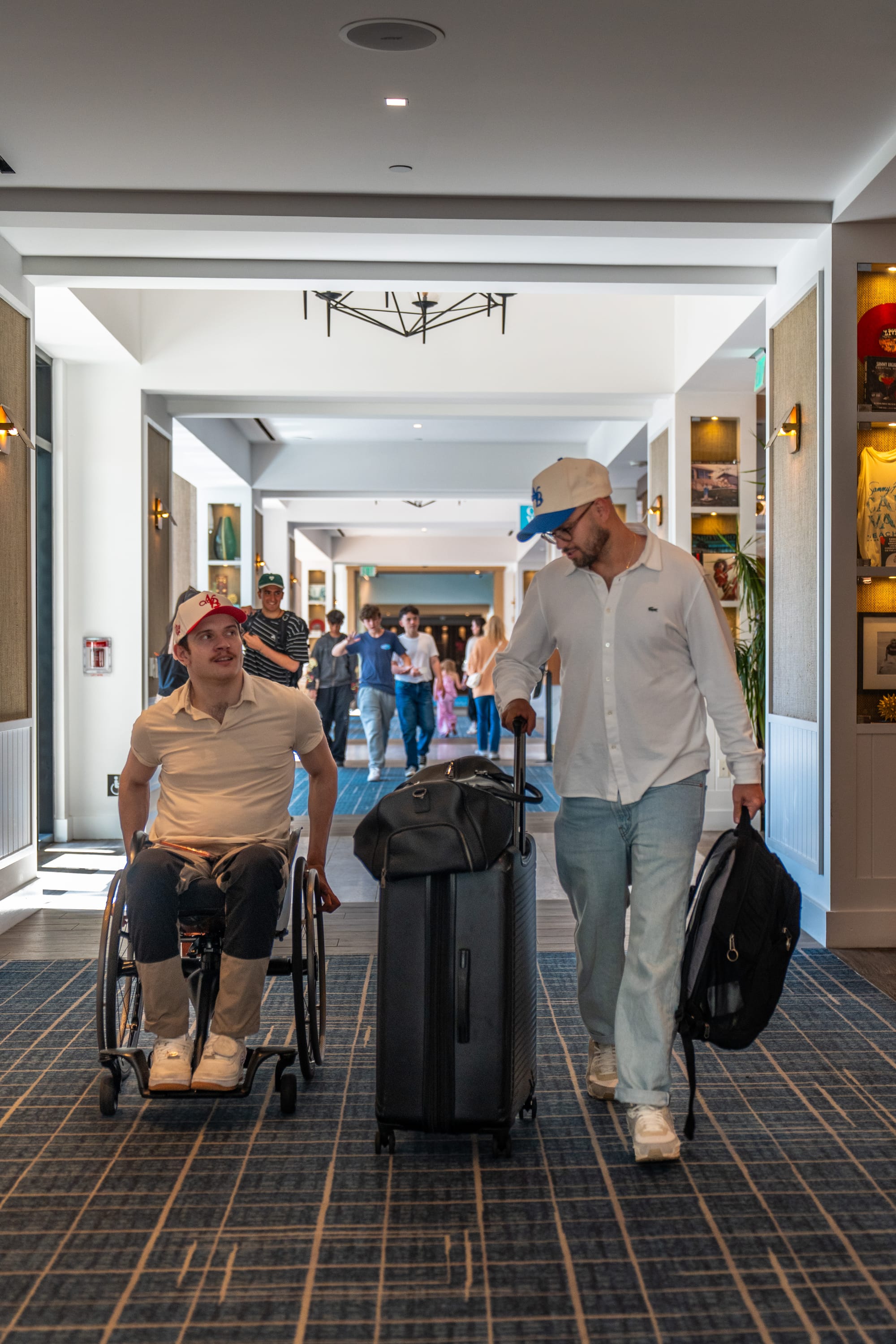
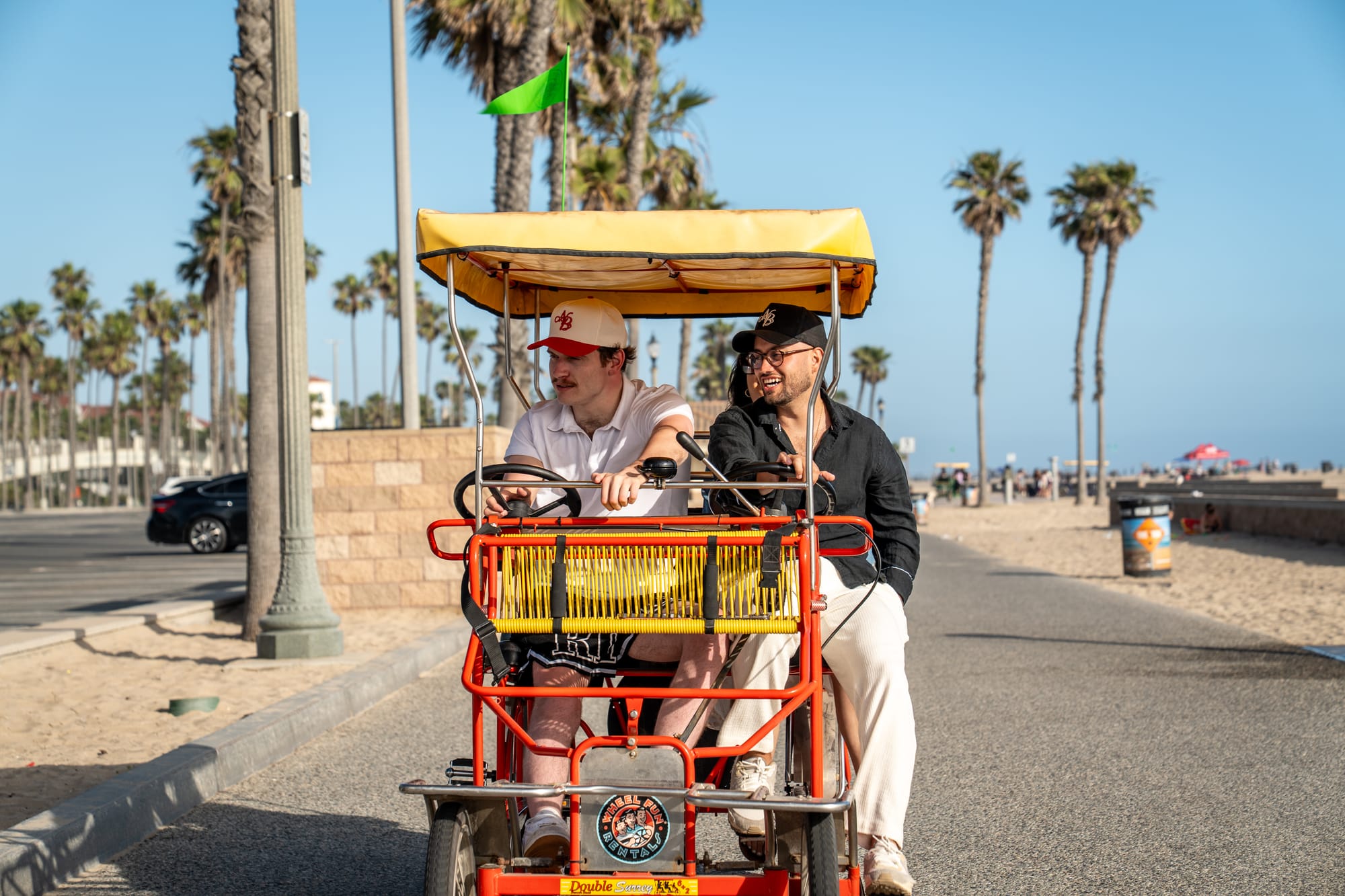
Arriving at the Waterfront Beach Resort and exploring the Huntington Beach boardwalk
Getting there
I flew out of Winnipeg, and like every flight, the process involved a pat-down at security since I can't walk through the standard scanner. It's something I've done enough times that it's just part of the routine now, but it does add time. The other consistent part of flying is the transfer onto the plane. I move from my wheelchair into an aisle chair and then into my seat, and it takes longer than it does for most travelers. It's not the most comfortable process, but it works and I've gotten used to managing it.
Once I landed in California, everything moved pretty smoothly. Getting my wheelchair back and making my way through the airport was straightforward, and transferring into the vehicle was easy. One of the things I've learned from years of travel is that a lot of the stress around getting places comes down to familiarity, and by now, navigating airports and transportation feels manageable even when I'm somewhere new.
The hotel
We stayed at The Waterfront Beach Resort in Huntington Beach. Drop-off was close to the entrance and check-in was smooth. The one thing I noticed right away was that the hill leading up to the hotel was steeper than I expected. For me personally, that wasn't an issue because I'm strong enough to push myself up independently, but it's something worth knowing ahead of time if you have less upper body strength or are using a power chair.
The room itself was one of the better accessible hotel rooms I've stayed in. The bed height was aligned with my manual wheelchair, which made transfers much easier than in a lot of hotels where the bed sits significantly higher. The room also had a fully accessible balcony with a level entrance.
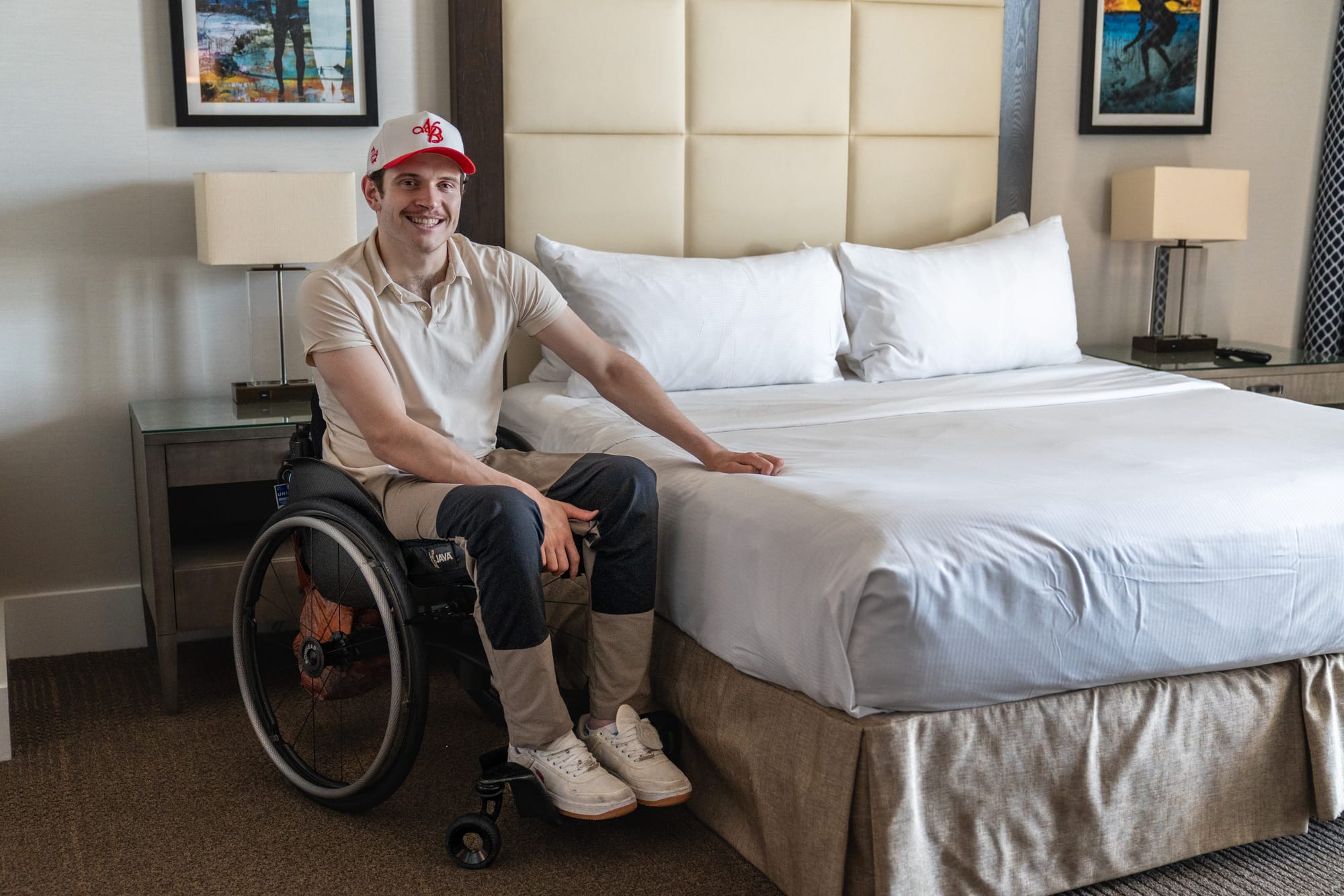
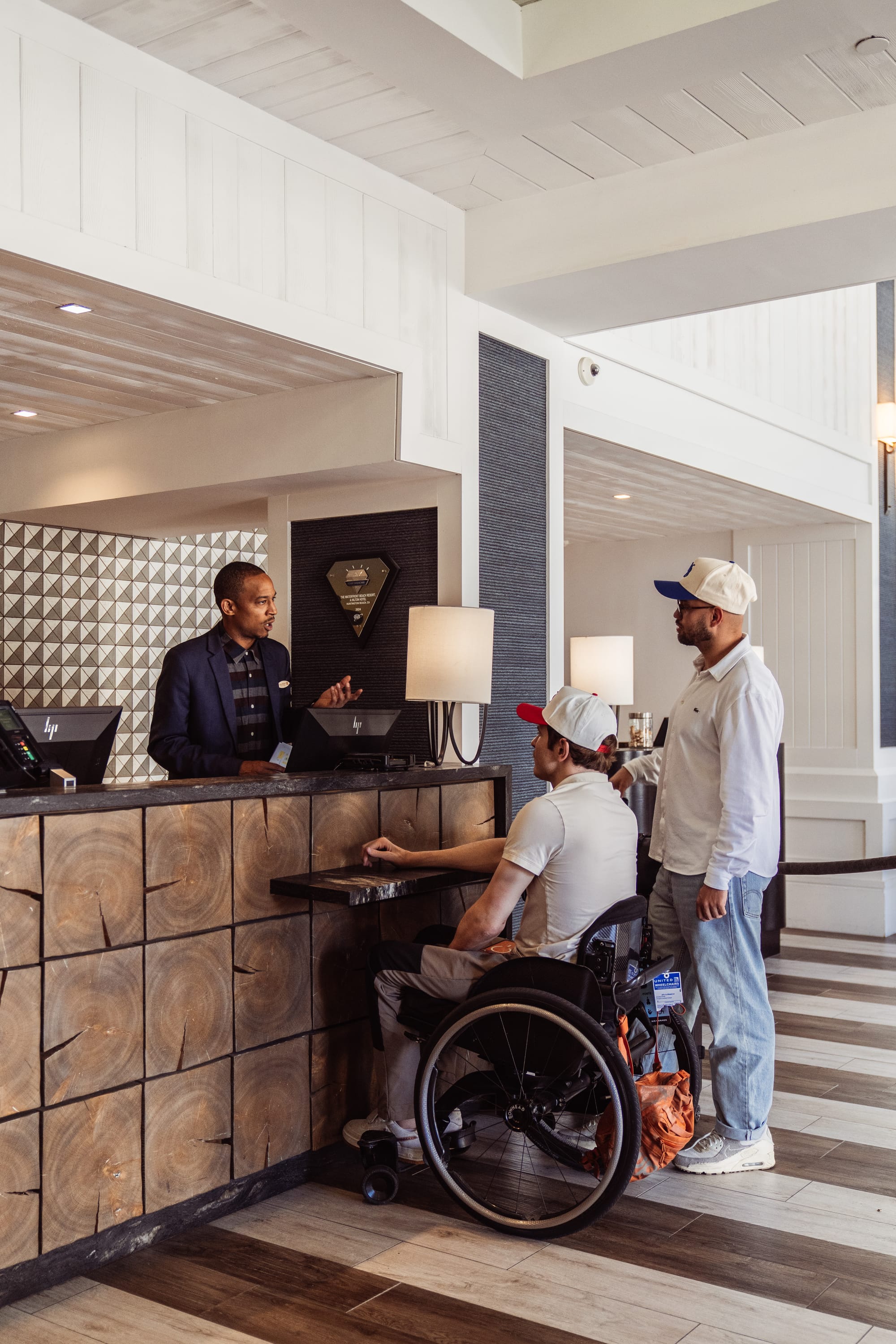
The accessible room at the Waterfront Beach Resort
The bathroom was generally very accessible. Grab bars beside and behind the toilet, a roll-in shower with no barrier, and a shower bench that was sturdy and well positioned. The sink had roll-under clearance, which made it easy to get close and wash my hands without reaching awkwardly. Two things I would change if I could: the handheld showerhead was mounted a bit too high, and I had to push up on the hose to remove it from the holder. That's manageable for me, but for someone with less reach or upper body strength, it could be a real barrier. The bigger issue was the shampoo, conditioner, and body wash dispensers, which were mounted on the opposite wall from the shower bench with no way to move them. Because I couldn't reach them once I was seated, I had to put shampoo in my hair before transferring into the shower. It's a small thing but it adds up when you're trying to do something as basic as washing your hair independently.
Day 1: Arrival and first night
The first day was mostly a travel and settle-in day. After getting to the hotel and getting comfortable in the room, we went out for dinner at a restaurant connected to the hotel property. Accessibility getting in was easy, and I was able to roll up to the table without any adjustments. I kept it simple with a couple of appetizers after a long travel day and called it an early night.
Day 2: Surfing at Huntington Beach Pier
This was the day I had been thinking about since I found out about the trip.
We started with breakfast at the hotel buffet, which was well set up for wheelchair access. Everything at the buffet was reachable, the table height worked well, and staff moved a chair out of the way so I could roll straight in. Because I have limited hand function, I used tongs to grab food, which worked fine.
After breakfast we headed to Huntington Beach Pier for the surfing session with McKinnon Surf & SUP Lessons. The logistics of getting to the setup area were handled really well. There was accessible parking close to the beach, which led directly onto a concrete pathway, and from there a beach mat extended all the way down to the tent where the session was based. That mat made the whole thing possible. I can't push my wheelchair through sand, so without it, getting to the water would have been a barrier before the experience even started.
Once we arrived, I got a safety briefing, was helped into a wetsuit by two people on the team, and spent some time watching others go before my turn. Getting into the water involved transferring from my wheelchair to a beach transfer chair and then onto the surfboard. I won't pretend the first few runs went the way I expected. I fell on my first four attempts, which was frustrating in the moment, especially because I had watched someone else go before me and barely fall at all. But that's the ocean. Once I started getting a feel for how the board moved, I ended up having two or three really solid rides. It was challenging and unpredictable, but that's also what made it feel like something real.
I was exhausted after, in a good way. The ocean and sun can do that to you. One thing I will mention is that i got sunburned on my feet. I am not able to feel that due to my injury, so its a good reminder to put on sunscreen!
But we re-energized at lunch, which was at Duke's right along the beach. We sat on the patio under umbrellas, which helped with the heat. The table clearance wasn't perfect at every spot, but I was able to find a position that worked well enough. Later in the day we explored the area a bit, visited the Tourism Huntington Beach office, and tried out some rental bikes. The bikes weren't independently accessible to me, but I transferred onto one and my friend pedaled while I sat and took in the ride. It wasn't the intended use, but we made it work.
We finished the evening at the rooftop bar at the hotel, which was accessible by elevator. The seating wasn't ideal up there since most tables didn't have full wheelchair clearance, but we found a spot near a fireplace and it was a comfortable enough place to wind down after a full day.
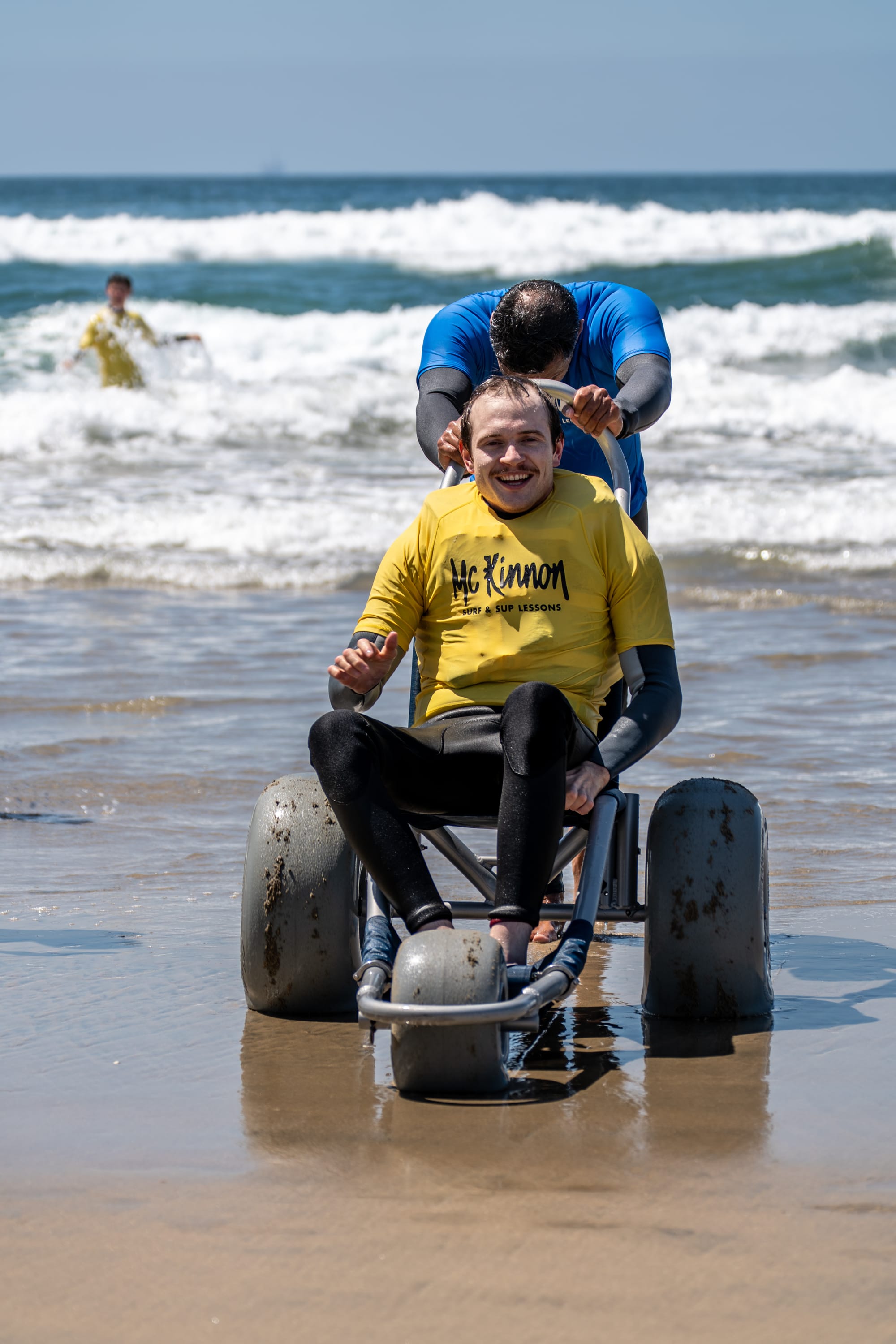
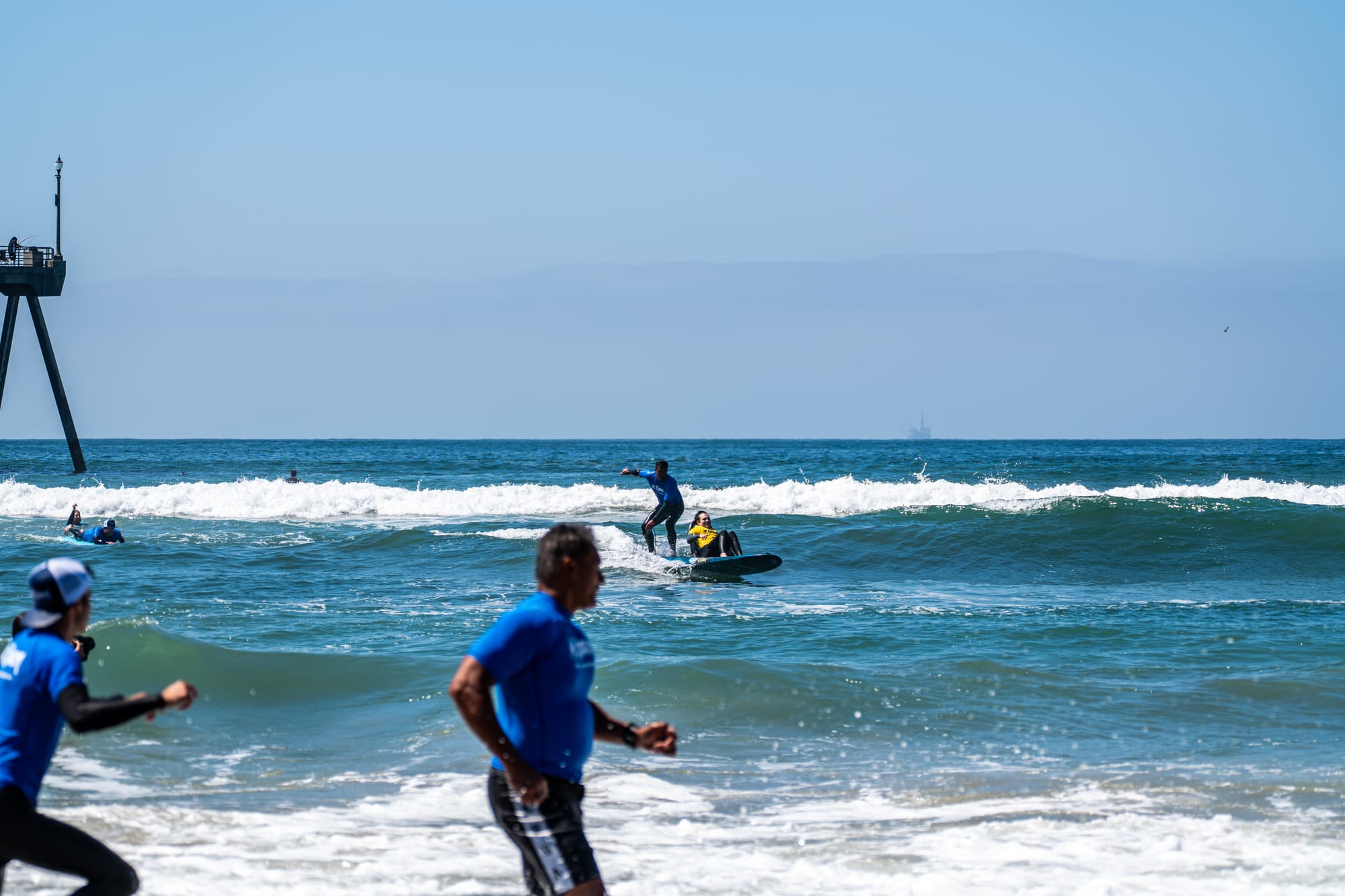
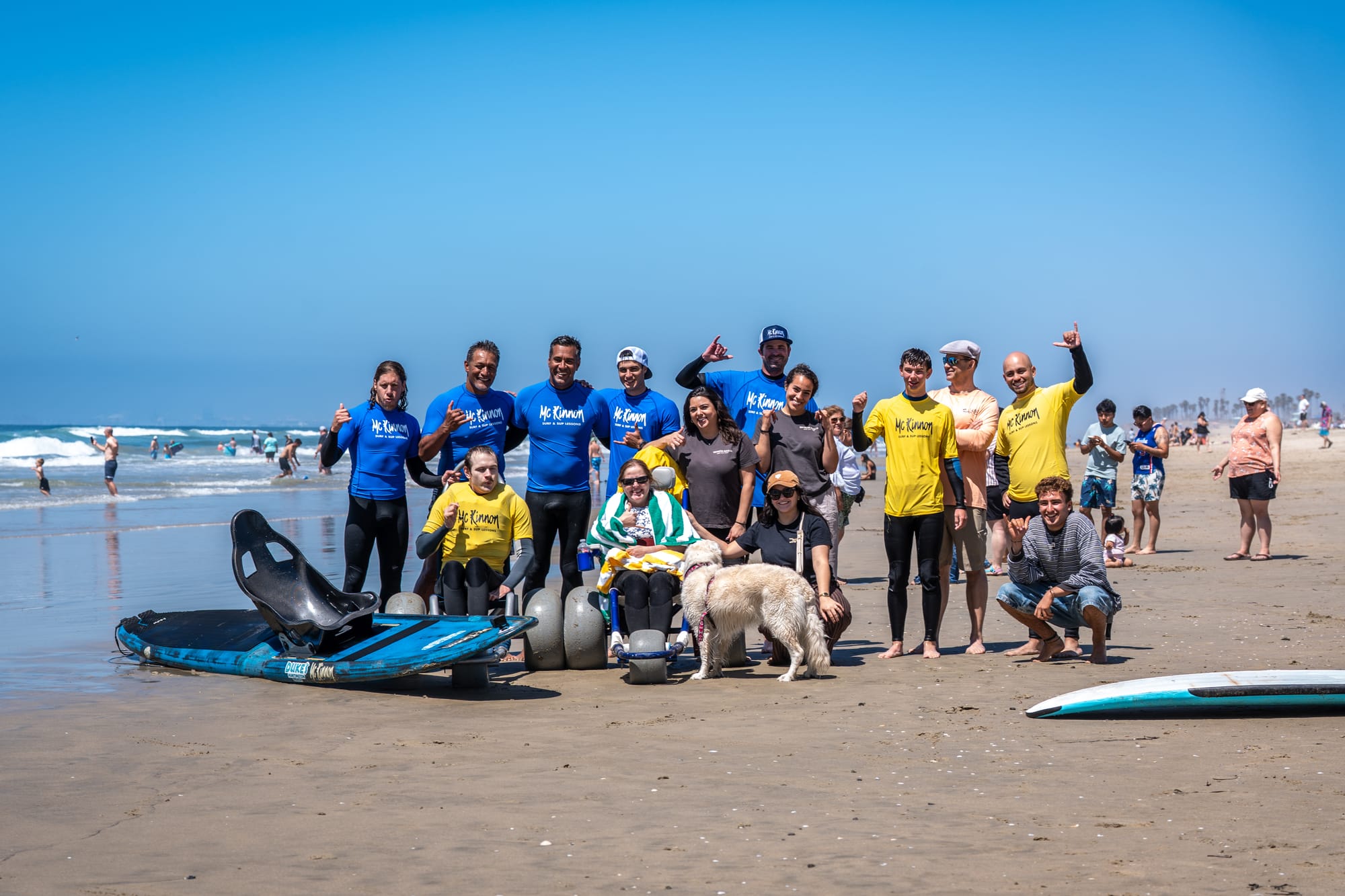
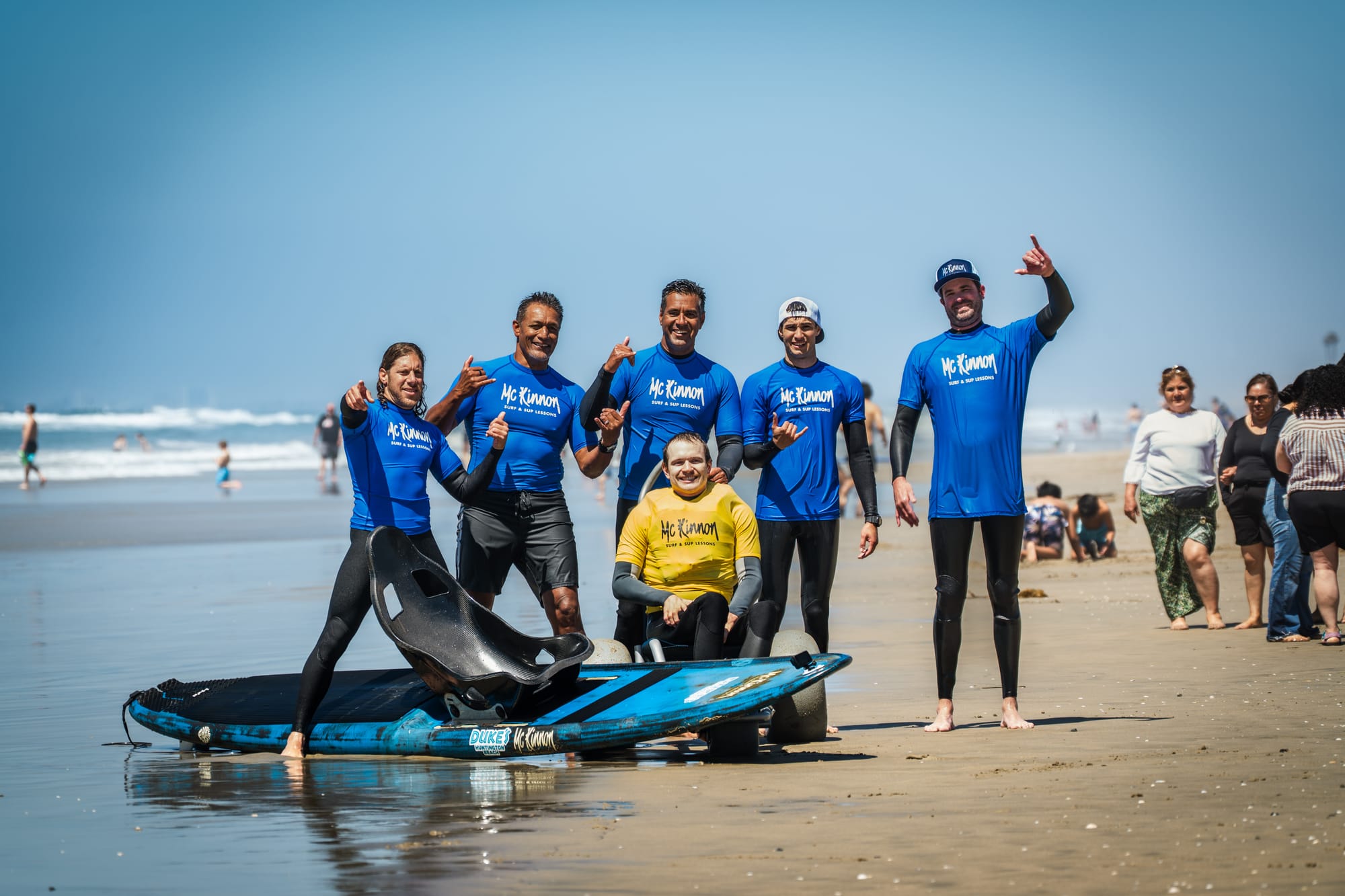
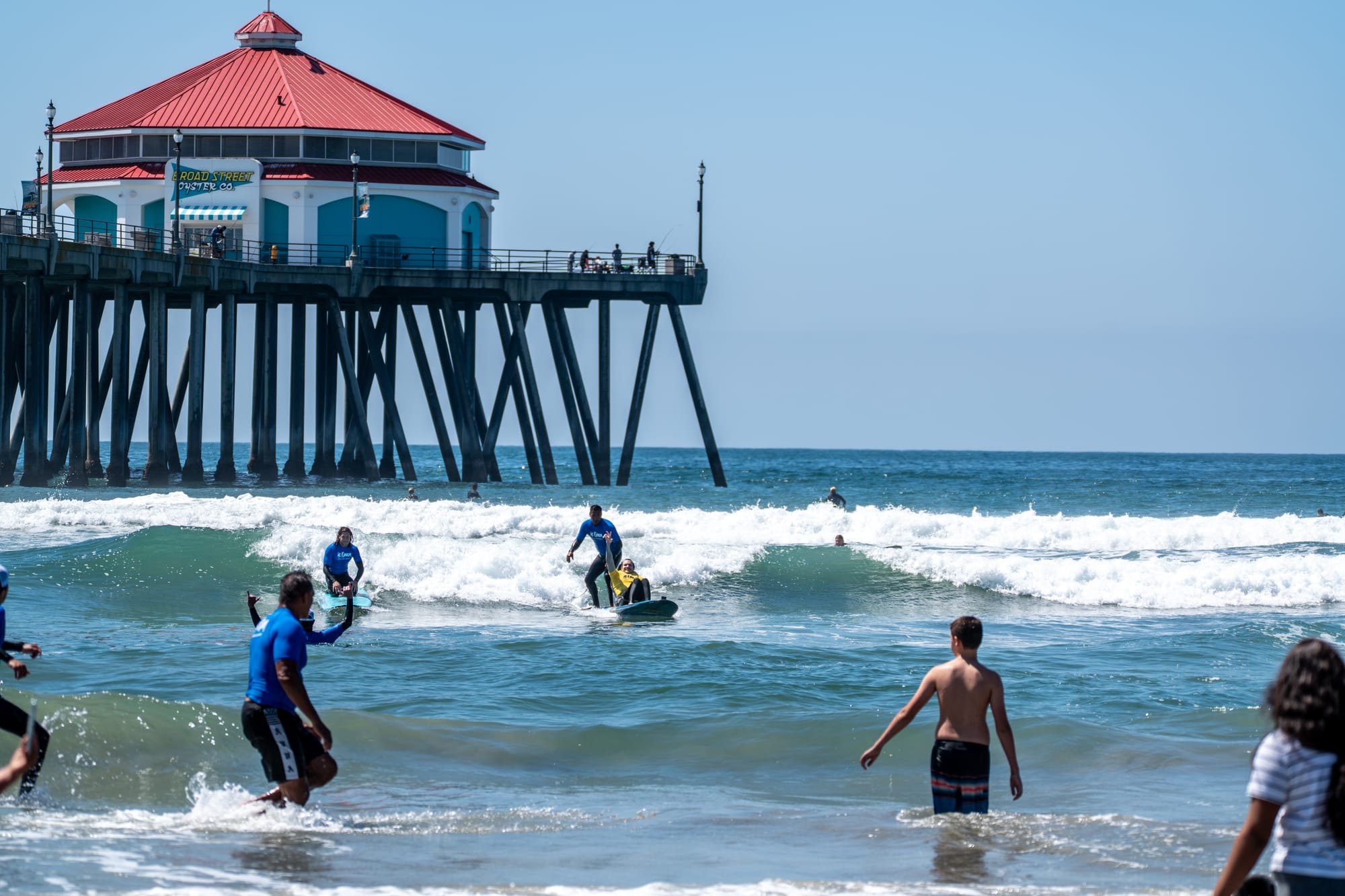
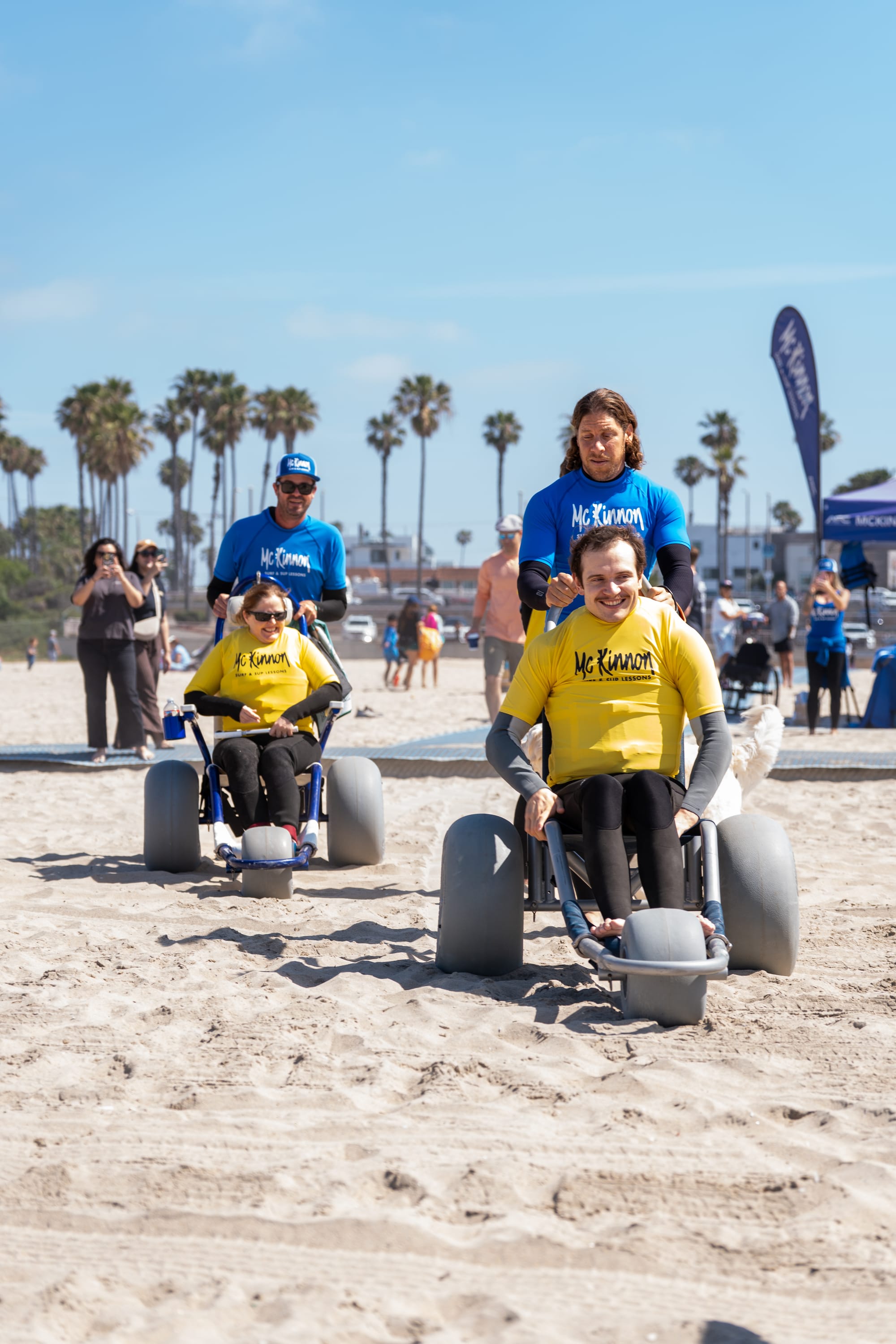
Adaptive surfing with McKinnon Surf & SUP Lessons at Huntington Beach Pier
Day 3: Downtown, the pier, and sunset on the beach
We started the day with breakfast at the hotel again and then headed downtown to explore. Our first stop was the world's largest surfboard! It's an even more interesting landmark when you hear the story of how it was actually ridden on a wave. From there we moved through a mix of surf shops and clothing stores. Everything we went into was accessible and I didn't run into any steps or barriers entering any of the businesses, which made it easy to browse without having to think too much about logistics.
After some filming and interviews as part of the trip content, I spent time on the pier, rolling the full length of it and taking in the views. The pier is fully accessible and made for some good moments out over the water. At the far end we had lunch at a restaurant overlooking the ocean, where I tried a crab cake sandwich for the first time. It was a good call.
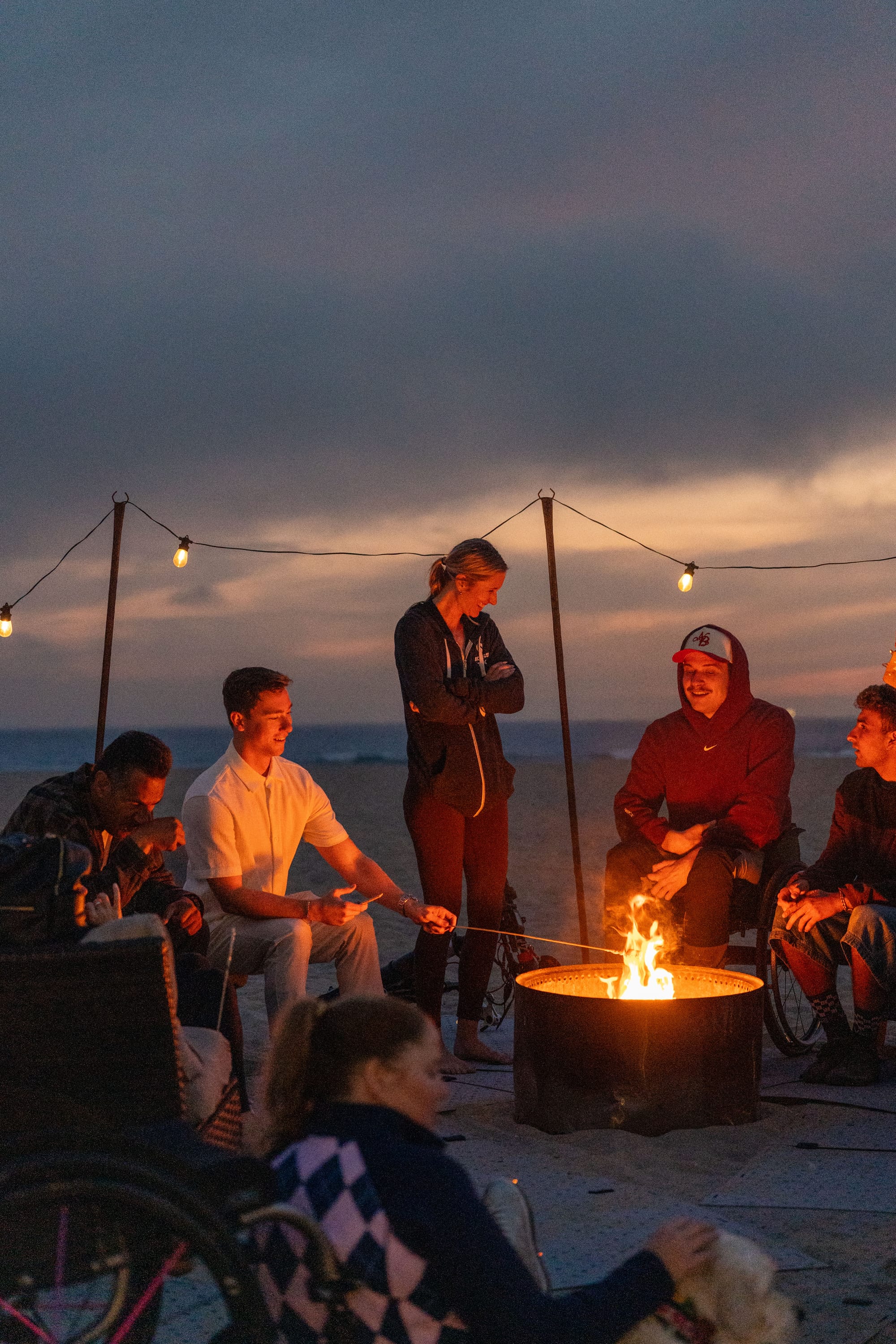
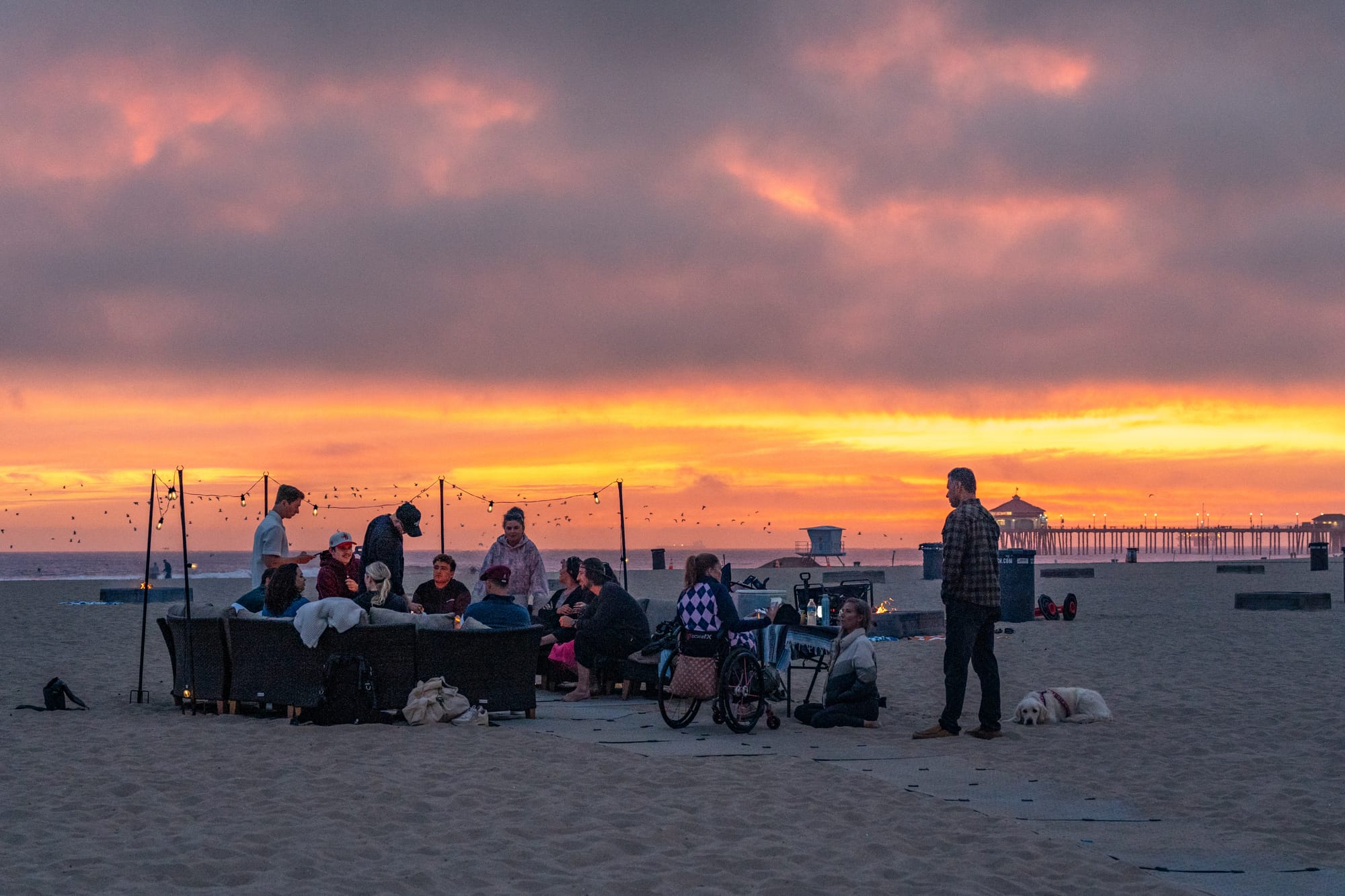
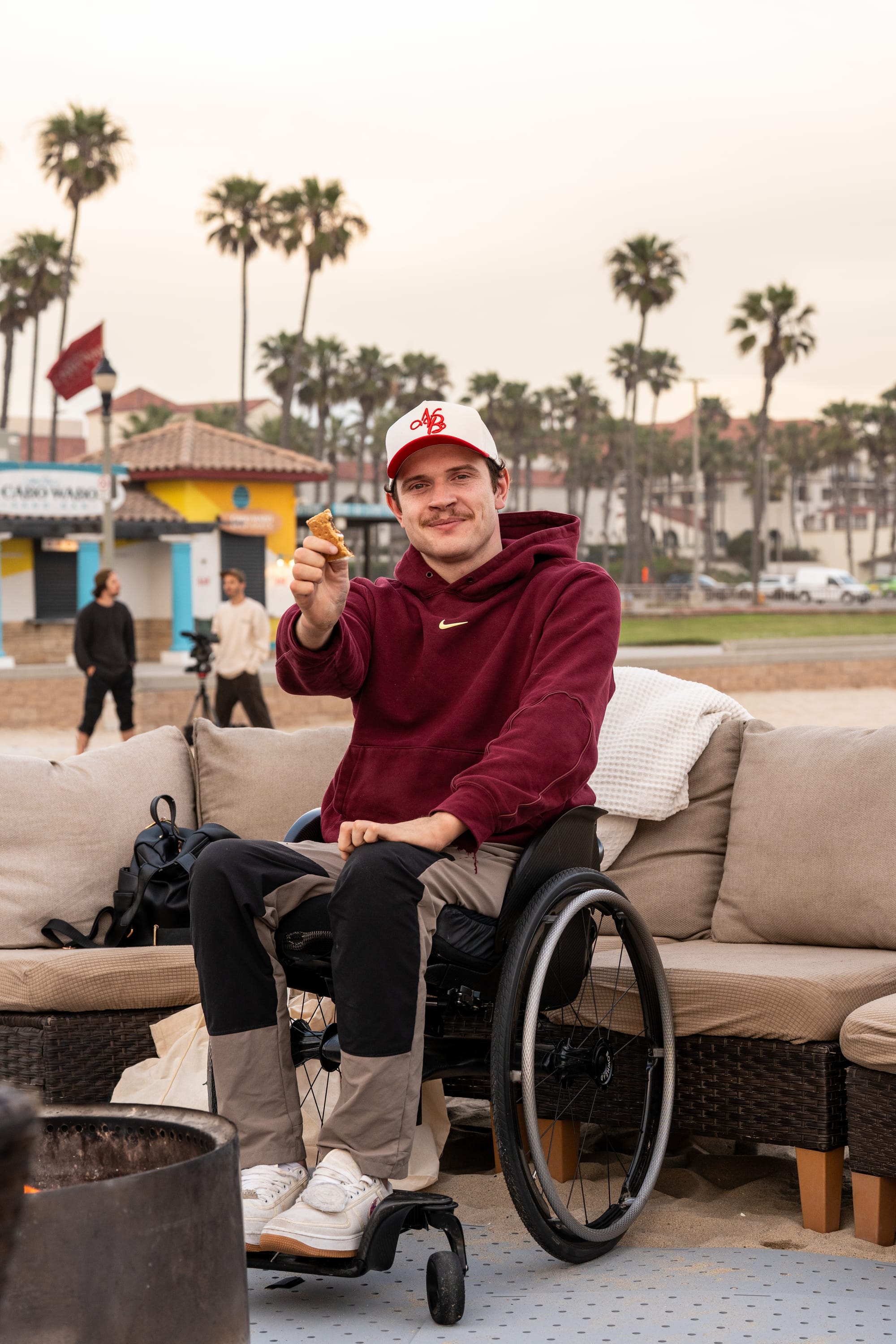
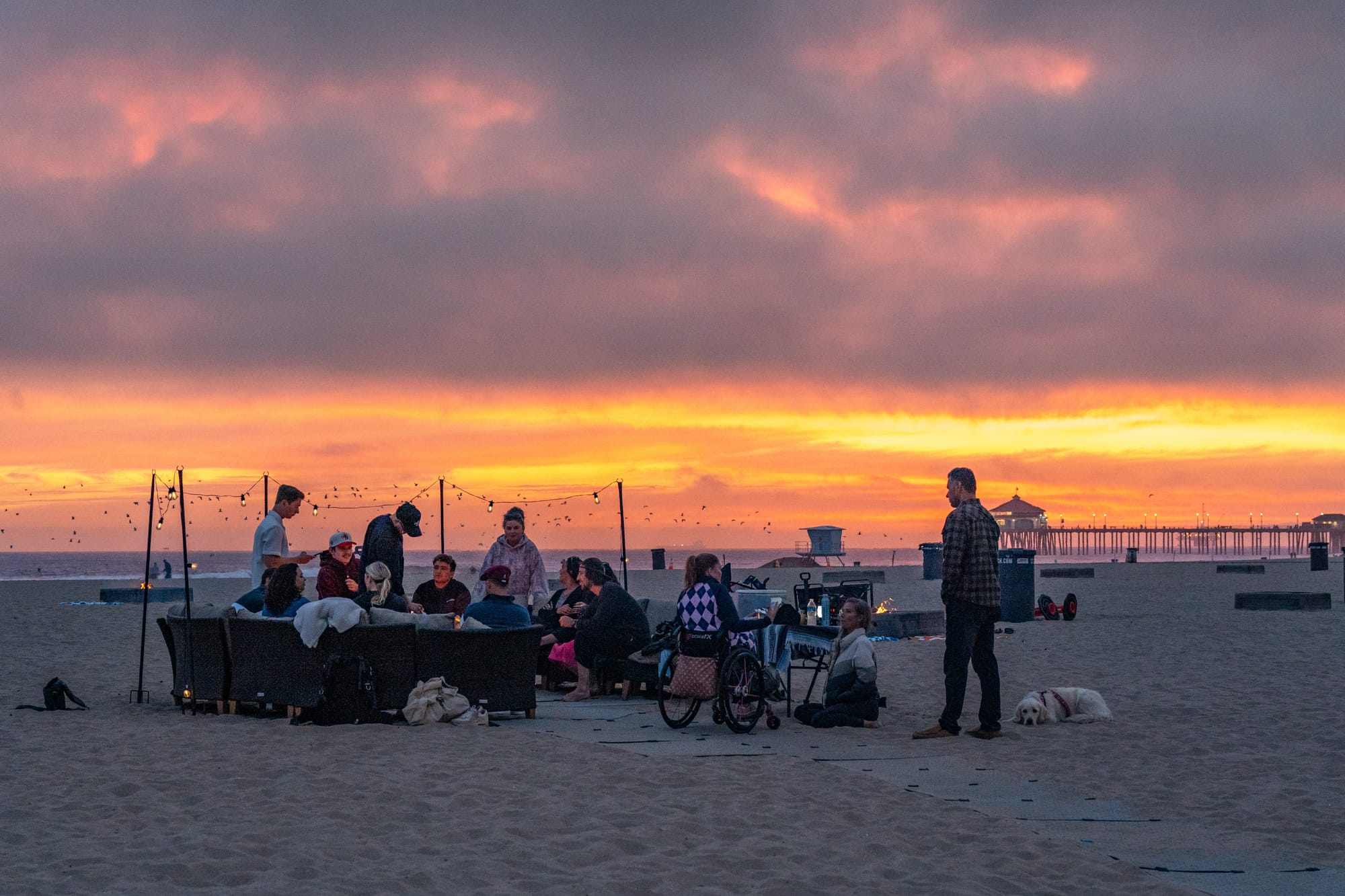
The evening was the other highlight of the trip for me. We went down to the beach for a sunset experience that had beach access mats laid out on the sand. Being able to roll onto the beach and sit by a fire while watching the sunset is not something I can usually do without a specific setup like that, and it made for a really memorable couple of hours. We roasted s'mores and just relaxed.
Dinner was at Sandy's Beach Shack, which was very accessible including the washroom. A relaxed, easy way to end a full day.
Day 4: Yoga, the surf museum, and the drive home
The final day started with adaptive yoga on the beach, led by an instructor right on the sand. For the first part of the session I stayed in my wheelchair because it gave me better control for the upper body movements. After a while I decided to try something different. With help from a friend, I transferred down onto a beach mat and sat directly on the sand. It's not something I do very often anymore, and it felt grounding in a way that was hard to describe after a few very active days.
After yoga we went to the Huntington Beach International Surf Museum, which has a ramped entrance at the back that comes in from the parking area near the surfboard landmark. It was interesting to walk through the history and artwork connected to surf culture, especially after everything we had done during the trip.
We stopped for a meal at Huntington Beach House, where the table setup wasn't standard wheelchair height but I was able to transfer to a bench and eat comfortably using a lower coffee table style setup.
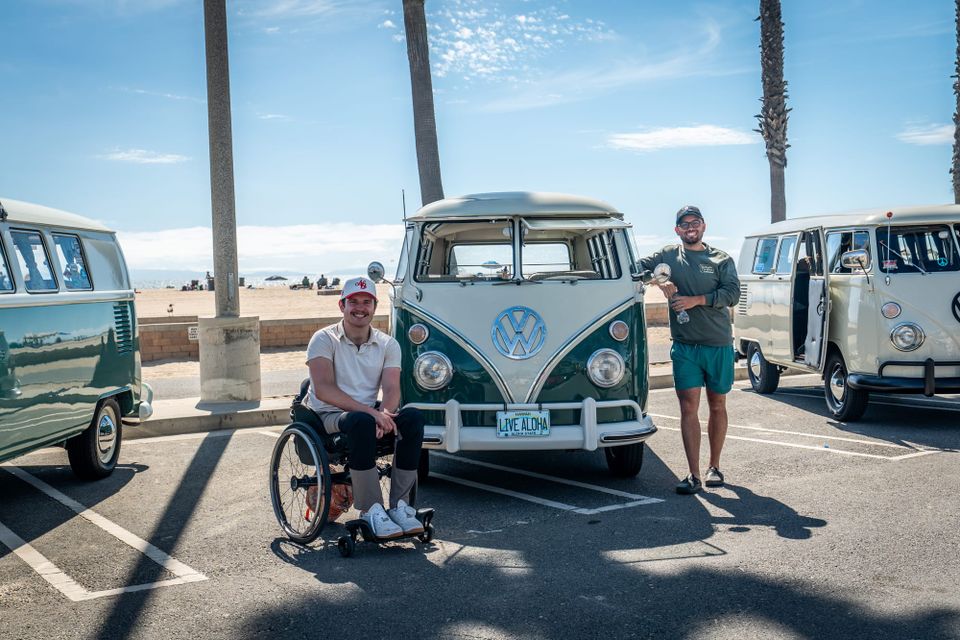
The afternoon brought one of the unexpected highlights of the trip. We drove along the Pacific Coast Highway in vintage Volkswagen Beetles and California vans. I rode in the backseat and the views along the coast were incredible. It was something I had always wanted to experience, and it ended up being one of my favorite parts of the trip.
Our final group dinner was at a rooftop restaurant in downtown Huntington Beach. Good setting, easy to get into, and a good way to close out the trip together.
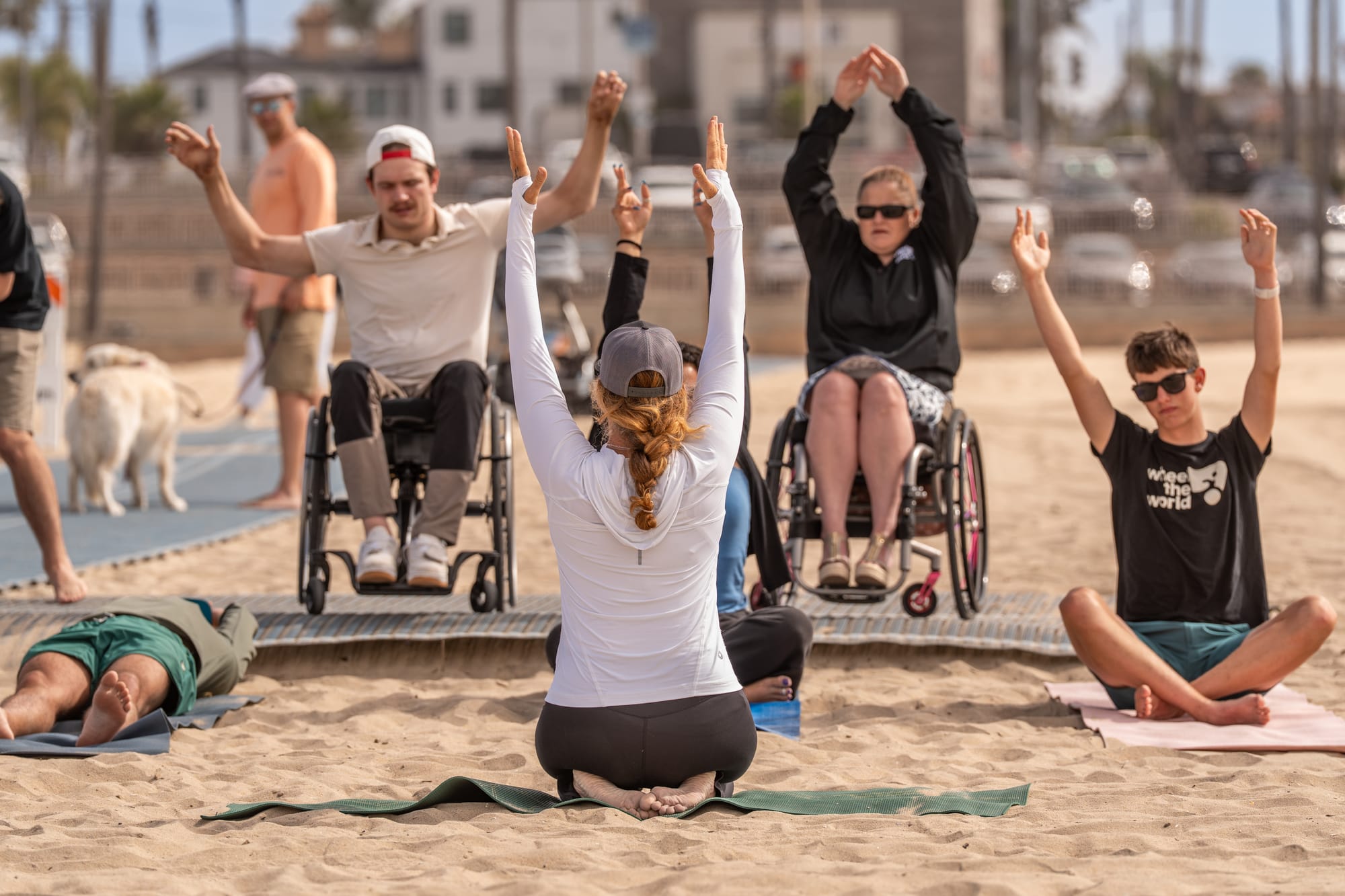
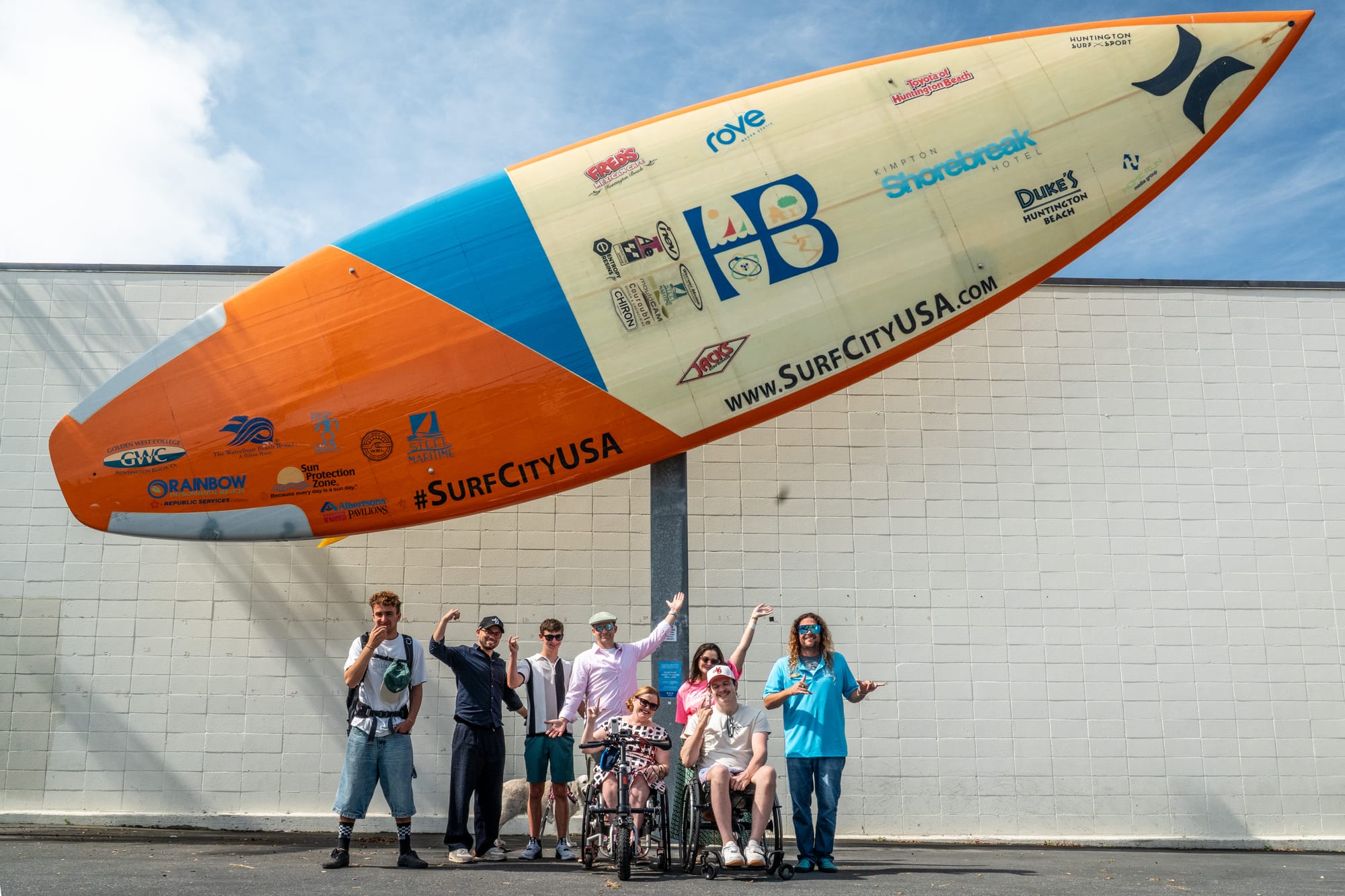
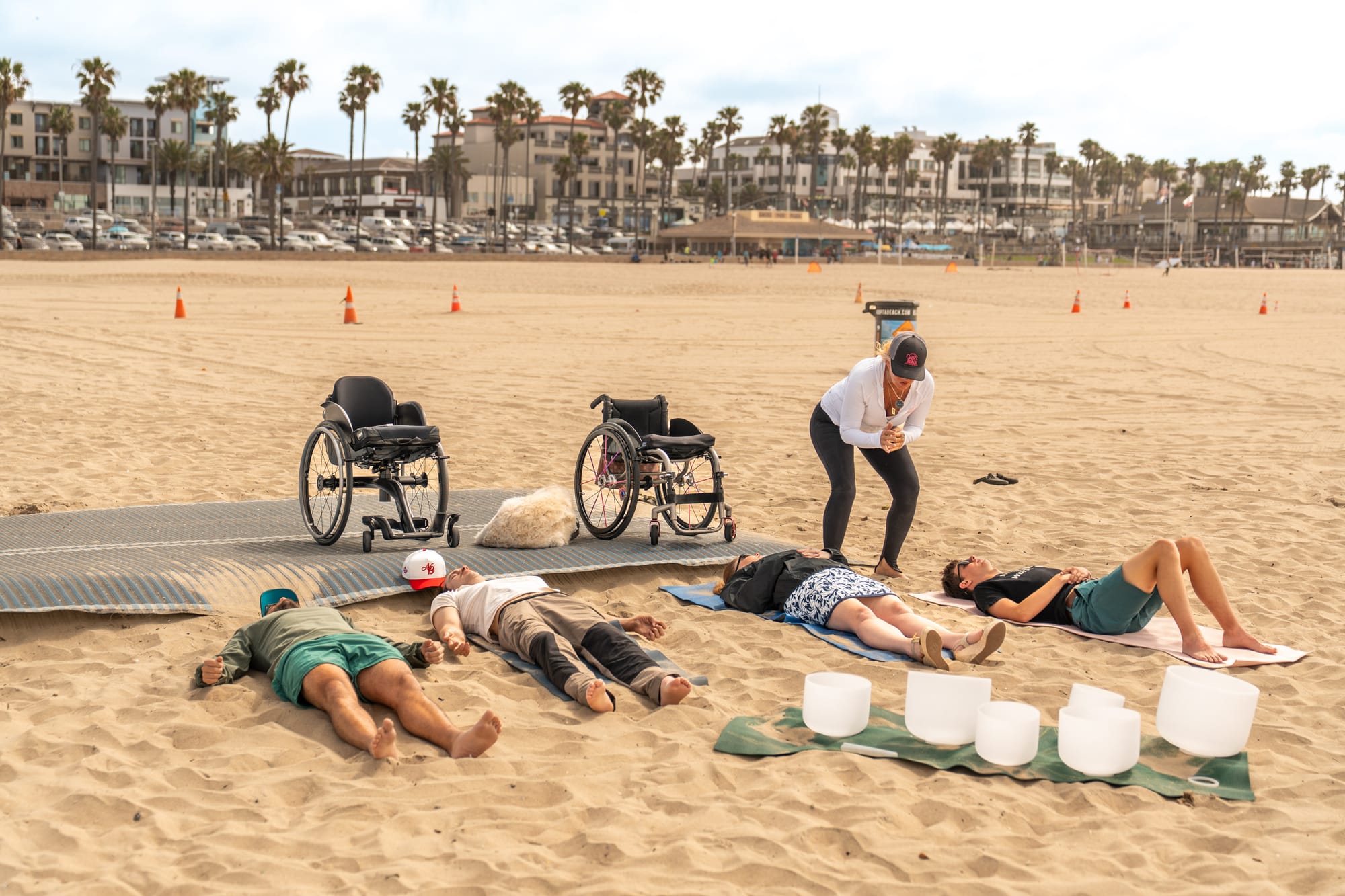
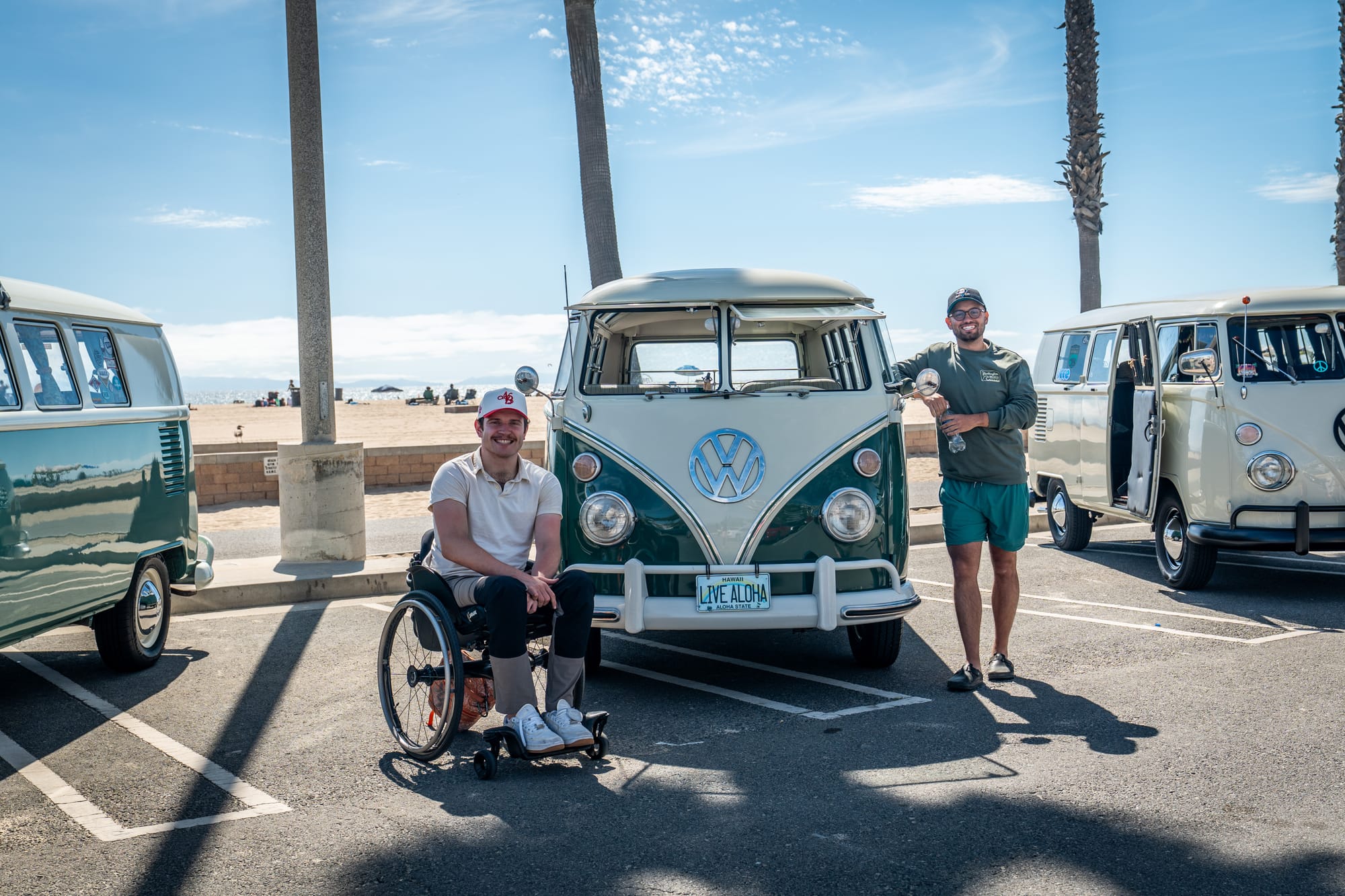
Adaptive yoga on the beach and the world's largest surfboard at the Huntington Beach Surf Museum
Getting around Huntington Beach
Overall, I found Huntington Beach easy to navigate. The sidewalks, curb cuts, and street crossings throughout the main areas were well maintained and felt consistent. Moving through the city felt predictable in the best way, which matters when you're somewhere new and trying not to spend half your energy routing around problems. I didn't run into any parts of the city I had to avoid or plan around significantly.
One thing worth knowing: public washrooms closer to the beach weren't always the cleanest. They were accessible in terms of being there and usable, but the maintenance could be better in some areas.
What I'd tell someone with the same needs
Huntington Beach is very doable for wheelchair users. The pier is fully accessible, the restaurants along it and throughout downtown are generally easy to get into, and the city's main areas are navigable without a lot of advance planning.
The specific things worth knowing before you go: the beach mat system at the pier is what makes beach access work for wheelchair users, so if you're planning any beach activity, confirm that's in place. The group bike rental doesn't have an accessible option, so go in knowing that. And if you're surfing with McKinnon Surf & SUP Lessons, give yourself permission to fall. The first few runs are a learning curve and that's okay.
Visit Huntington Beach with peace of mind
Find hotels, things to do, and more with real accessibility information
Plan my accessible visit

Comments ()